
Have you ever felt a heavy weight in your chest after making a mistake, like you’re not good enough to be forgiven? That feeling has a name in Scripture, and understanding it can change how you see yourself.
This guide walks through the condemnation meaning in the Bible, where the word comes from, and how it differs from the gentle nudge of conviction. By the end, you’ll know exactly what the Bible says about condemnation and how to walk free of it.
What Does Condemnation Mean in the Bible?
In simple terms, condemnation means being judged guilty and sentenced for wrongdoing. It’s the courtroom word for “you have failed, and now you must pay.” In the Bible, condemnation often points to the guilt of sin and the separation it creates between people and God.
But condemnation isn’t only about a legal verdict. It’s also that inner voice that whispers you’re a failure long after you’ve said sorry. That voice can be loud, and it can follow you around like a shadow.
Quick Definition Table
| Term | Meaning |
| Condemnation | A judgment of guilt with a penalty attached |
| Self-condemnation | Judging and punishing yourself, even after God has forgiven you |
| Conviction | A gentle inner prompting that leads to change, not shame |
Self-condemnation meaning in the Bible is a bit different from the legal idea of condemnation. This is when a person keeps blaming themselves for something long after forgiveness has been offered. It’s a real struggle for many believers. You can know in your head that you’re forgiven and still feel guilty in your heart. That gap between head and heart is where self-condemnation lives.
The Original Hebrew and Greek Words for Condemnation
Looking at the original languages helps clear up a lot of confusion. Words carry more weight in their native tongue, and this one is no exception.
Hebrew: Rasha (רָשַׁע)
In the Old Testament, the Hebrew word often tied to condemnation is rasha, which means “wicked” or “guilty.” It shows up in courtroom scenes, where a judge would declare someone rasha, meaning they were in the wrong and owed a penalty. This word carries a strong sense of moral failure, not just a small slip-up.
Greek: Katakrino and Katakrima

In the New Testament, two Greek words matter most. Katakrino is a verb meaning “to judge against” or “to pass sentence.” Katakrima is the noun form, meaning the actual sentence or penalty handed down. Paul uses katakrima in Romans to describe the punishment sin brings, and then he flips the story by showing how that punishment is lifted.
Opposite of condemnation in the Bible is often described using words like justification and righteousness. Where condemnation says “guilty, pay the price,” justification says “declared right, debt paid in full.” These two ideas sit on opposite ends of the same courtroom.
Key Bible Verses About Condemnation (KJV)
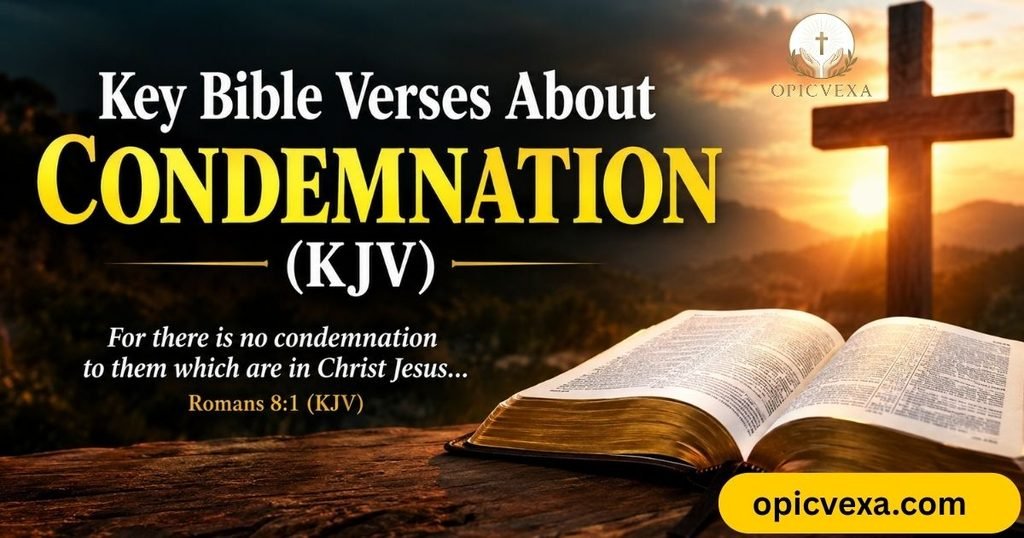
A few verses carry most of the weight on this topic:
- Romans 8:1 – “There is therefore now no condemnation to them which are in Christ Jesus.”
- John 3:17 – “For God sent not his Son into the world to condemn the world; but that the world through him might be saved.”
- John 5:24 – speaks of passing from death to life without coming into condemnation.
- Romans 5:16 – contrasts judgment that brought condemnation with the free gift that brings justification.
What does no condemnation mean in the Bible? It means that once a person places their trust in Christ, the guilty verdict no longer applies to them. The debt has been paid by someone else. It’s like a court case where the judge cancels the sentence because another person already served it on your behalf.
Romans 8:1: The Central Verse on Condemnation
This one verse is the anchor for the whole topic. Paul writes it right after spending several chapters describing the struggle between the old sinful nature and the new life offered through grace. Romans 8:1 lands like a breath of fresh air after all that tension.
Condemnation Hebrew meaning doesn’t directly apply here since this is a New Testament passage written in Greek, but the courtroom picture from the Old Testament still helps explain it. Paul is saying the trial is over. The verdict has already been announced, and for those in Christ, it’s “not guilty.” That’s a bold claim, and it’s the heartbeat of the whole book of Romans.
Old Testament vs. New Testament View of Condemnation
The Old Testament often shows condemnation tied closely to the Law. If someone broke the Law, they stood condemned before it, no exceptions. The Law acted like a mirror, showing people exactly where they fell short, but it didn’t offer a way to fix the problem.
The New Testament shifts the picture. Condemnation meaning in Greek, through words like katakrima, still describes real guilt, but now there’s a rescue built into the story. Redemption through Christ becomes the answer to the problem the Law could only point out. The Old Testament diagnoses the sickness. The New Testament offers the cure.
Condemnation vs. Conviction: Why the Difference Matters
This might be the most practical section in the whole guide, because mixing these two up causes so much unnecessary pain.
Condemnation says, “You are worthless, and there’s no hope for you.” Conviction says, “This choice hurt you and others, and here’s a way to make it right.” One buries you. The other builds you up. The Holy Spirit is often described as the source of true conviction, gently nudging a person toward change without crushing their sense of worth.
Comparison Table: Condemnation vs. Conviction
| Condemnation | Conviction |
| Focuses on the person’s worth | Focuses on the specific action |
| Leaves you feeling stuck and hopeless | Leaves you feeling motivated to change |
| Often vague and general (“you always mess up”) | Specific and clear (“that word was unkind”) |
| Comes from guilt or an accusing voice | Comes from a caring, corrective source |
A short, honest question often helps here: does this feeling point me toward growth, or does it just make me feel small? If it makes you feel small with no way forward, it’s likely condemnation talking.
Condemnation vs. Judging Others
There’s a real difference between recognizing wrong and condemning a person outright. The Bible actually warns against being quick to condemn others, since none of us are without fault ourselves. Jesus told the woman caught in wrongdoing, “Neither do I condemn thee, go and sin no more.” He didn’t ignore what happened, but he also didn’t crush her with blame.
This matters for everyday life too. It’s easy to label someone by their worst moment. A little mercy goes a long way, both toward others and toward yourself.
Why the Bible Talks So Much About Condemnation
Scripture spends so much time on this topic because guilt is one of the heaviest things a person carries. Left unaddressed, it can shape how someone sees their whole life. The Bible doesn’t ignore guilt or pretend it doesn’t matter. It takes sin seriously, but it also offers a clear path out through salvation and grace.
A short, personal note here: many people quietly carry old guilt for years, thinking they’ve never really been forgiven, when Scripture says otherwise. That gap between what’s true and what someone feels is often the real battle.
How to Overcome Feelings of Condemnation
Knowing the theology is one thing. Feeling free of the weight is another. A few steps that genuinely help:
- Name the specific lie you’re believing, instead of letting the guilt stay vague and shapeless.
- Speak truth out loud, even Romans 8:1, until it starts to sink from your head into your heart.
- Talk to someone you trust instead of carrying it alone in silence.
- Give yourself the same grace you’d offer a close friend in your shoes.
- Remember that feelings are real, but they aren’t always accurate reporters of truth.
Spiritual growth often happens slowly, one honest step at a time. There’s no shame in needing to repeat these steps more than once.
Frequently Asked Questions
How to break the spirit of condemnation?
Start by naming the specific thoughts that keep pulling you down, then answer each one with a truth from Scripture. Talking with a trusted friend, pastor, or counselor also helps break the isolation that condemnation feeds on. Over time, the accusing voice tends to lose its grip when it’s met with truth instead of silence.
What does the Bible mean by no condemnation?
It means the guilty verdict has been lifted for anyone who places their trust in Christ. The penalty that sin would normally bring has already been paid. It’s a fresh start, not a loophole, and it comes with an invitation to live differently.
What does it mean when God condemns someone?
This idea shows up less often than people expect. Scripture actually says God’s main aim wasn’t to condemn the world but to offer a way of rescue through his Son. Where judgment does appear, it’s usually tied to a person’s ongoing refusal to accept that rescue, not a random or harsh decision.
What is the meaning of spiritual condemnation?
Spiritual condemnation refers to the sense of guilt or separation a person feels in their relationship with God, whether that feeling is accurate or not. It can come from real, unaddressed wrongdoing, or it can be a false weight someone carries even after being forgiven. Learning to tell the two apart is a big part of finding peace.
Final Thoughts
Understanding the condemnation meaning in the Bible can lift a weight you may have carried for a long time without realizing it.
The courtroom language, the Hebrew and Greek roots, and verses like Romans 8:1 all point to the same good news: the verdict has changed for anyone who turns to Christ.
If this guide gave you a clearer picture of your own story, consider sharing it with someone who might be carrying that same heavy feeling today. Sometimes the truth that sets one person free is exactly what another person needs to hear.

Olivia Grace is a writer and content creator at Opicvexa, passionate about creating meaningful prayers, heartfelt blessings, inspirational messages, and uplifting words for everyday life. Her writing focuses on faith, hope, gratitude, encouragement, and the special moments people share with family and loved ones.

2 thoughts on “Condemnation Meaning in the Bible: A Full Guide”